
When Your Systems Fail, Patient Care Is at Risk
Cybersecurity built specifically for EMS and Fire agencies, so your crews can keep working when everything else goes down.
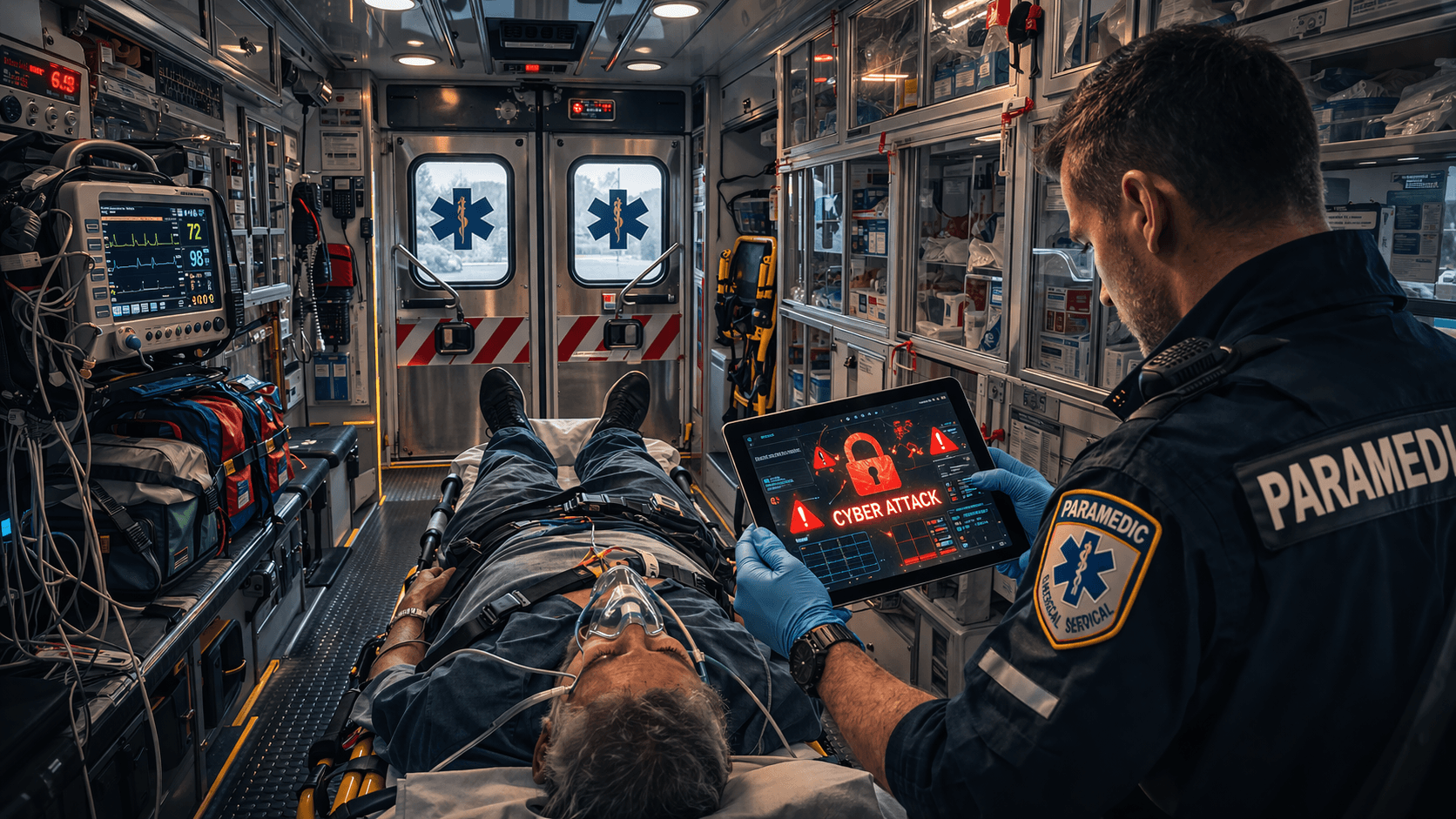
Monday morning. Your dispatch center is dark.
“Your files are encrypted. Pay 4.5 Bitcoin within 72 hours.”
Crews are running calls blind. No patient history. No routing. No records.
The ransom is $300,000. Your agency has 72 hours.
What’s your plan?
This isn’t hypothetical. Ransomware attacks on EMS agencies are happening right now across the country.
Built by Someone Who’s Been There
This Isn’t Generic Cybersecurity
15+
Years real-world EMS experience
15+
Years in technology & cybersecurity
CISSP
Certified Information Systems Security Professional
You’re not explaining your world to us. We already understand it.
Our Focus
What Iron Rod Security Does
Iron Rod Security advises EMS and Fire agencies on how to keep patient care moving during ransomware, vendor outages, and system failures.
We focus on operational continuity for CAD, ePCR, dispatch, billing, and other systems crews depend on during active calls.
Steven Carlson brings more than 15 years in EMS and more than 15 years in cybersecurity and technology, plus CISSP and Security+ credentials.
A cyber event in EMS is not only a data problem. It can become a patient care problem within minutes.
We do advisory work for emergency response agencies. We do not act as a helpdesk, MSP, or general IT support provider.
The Reality
Most Agencies Think They’re Fine. Until They’re Not.
Everything works… until it doesn’t.
- A ransomware attack locks your reports and billing
- Your ePCR system goes down mid-transport
- A vendor breach exposes patient data
- Crews are forced to operate without systems they depend on
In EMS, downtime isn’t just inconvenient. It’s dangerous.
If your systems failed right now, what would your crews do?
Our Approach
Security That Protects Operations, Not Just Networks
Iron Rod Security focuses on one thing: keeping your agency operational during real-world cyber events.
Identify Real Risks
Understand where your actual vulnerabilities are, not theoretical ones.
Prepare for Failures
Plan for system failures before they happen during active calls.
Confident Decisions
Make informed decisions about vendors and technology.
Protect Patient Data
Keep patient data secure without slowing down your crews.
Services
Simple, Focused Services That Deliver Real Value
EMS Cyber Readiness Assessment
Know where you stand before something breaks.
- ✓Leadership interview
- ✓Workflow-based risk analysis
- ✓Vendor exposure review
- ✓HIPAA posture overview
- ✓Clear, prioritized report
Operational Security Program (vCISO)
Ongoing protection without a full-time security team.
- ✓Monthly leadership advisory
- ✓Policy & compliance guidance
- ✓Incident response planning
- ✓Vendor security oversight
- ✓Dedicated advisory time
Vendor Security Review
Don't trust vendors blindly.
- ✓ePCR system reviews
- ✓CAD upgrade evaluations
- ✓Billing provider assessments
- ✓Third-party tool vetting
Why Us
Why Agencies Choose Iron Rod Security
Built for EMS
We don't generalize across industries. Everything we do is tailored to EMS and Fire workflows.
Operational Focus
We focus on what happens during real incidents, not just policies on paper.
Independent Advice
We are not tied to vendors or IT providers. Our only priority is your agency's security.
Clear Communication
No jargon. No confusion. Just clear guidance your leadership team can act on.
How It Works
Simple, Clear Process
Assessment
We identify your risks and vulnerabilities across systems, vendors, and workflows.
Strategy
We define what needs to be fixed, prioritized, and planned for.
Ongoing Protection
We guide your agency over time to maintain a strong security posture.
Where We Actually Help
Real-World Scenarios We Address
These aren’t hypothetical. They’re situations EMS and Fire agencies face today.
Evaluating a new ePCR vendor
The risk
The sales rep says they're HIPAA compliant and SOC 2 certified. You have no way to verify those claims or know what happens to your patient data after it leaves your tablets.
How we help
We review their security architecture, data handling, BAA terms, and incident history so you sign with confidence.
Ransomware hits your billing provider
The risk
Your billing team can't access claims. Patient demographics, insurance data, and financial records are locked. You don't know what was exposed.
How we help
With an incident response plan already in place, your leadership knows exactly who to call and how to maintain operations during recovery.
A crew member loses a tablet in the field
The risk
The device had ePCR records and patient demographics. It wasn't encrypted. You're not sure if this qualifies as a reportable HIPAA breach.
How we help
We assess the exposure, determine notification requirements, and put device management policies in place to prevent it from happening again.
Your CAD vendor pushes a major update
The risk
The new version changes how dispatch data is stored and shared. Your IT provider says it looks fine, but nobody has evaluated the security implications.
How we help
We evaluate the update, identify new risks, and advise leadership on whether to proceed, delay, or push back on the vendor.
Common Questions
Frequently Asked Questions
We already have an IT provider.
Your IT provider manages your systems. We secure them. IT generalists handle helpdesk, networking, and hardware. They rarely have deep expertise in EMS cybersecurity, field HIPAA compliance, or vendor security. We work alongside your IT team, not against them.
Are you going to sell us software?
No. We are vendor-neutral. We don't sell products, resell software, or earn commissions. If we recommend a tool, it's because you need it, not because we profit from it.
What's a vCISO?
A Virtual Chief Information Security Officer. Unlike a one-time consultant, a vCISO provides ongoing security leadership: attending your meetings, tracking threats, reviewing vendors, and keeping your posture improving over time.
We're a small agency. Are we really at risk?
Yes. Ransomware operators use automated scanning. They don't check your fleet size. A 10-truck IFT company holds the same patient data as a 200-unit county system, and smaller agencies are often easier targets.
Do you implement or just advise?
We advise. Your IT team handles implementation. This keeps accountability clear and keeps us independent. We work directly with your IT staff to make sure our recommendations are actionable.
What does the Assessment involve?
Leadership interviews, field technology analysis, vendor review, HIPAA posture assessment, and incident readiness evaluation. You get a clear, prioritized report. Not a 200-page document nobody reads.
How do you help with incident response?
We build operationally focused incident response plans that account for what actually happens when CAD, ePCR, or billing systems go offline during active calls. Your crews know exactly what to do, who to call, and how to keep patient care moving.
What is a vendor security review?
An independent evaluation of a vendor's security architecture, data handling practices, BAA terms, and incident history before you commit. Many EMS breaches originate from a third-party vendor, not the agency itself.
How does HIPAA apply to EMS field operations?
EMS collects and transmits PHI in uncontrolled environments: on tablets, over wireless networks, and through billing and ePCR platforms. Generic compliance frameworks often miss the real operational risks crews face in the field.
The Worst Time to Think About Security Is During an Incident
When something goes wrong, there’s no time to figure it out. Preparation isn’t optional anymore.
Schedule Your EMS Cyber Readiness Assessment